call 1 347-342-8184

What Happens When a Hospital's Equipment Fails at the Wrong Moment?
Medical equipment failure can lead to costly downtime, delayed care, and serious risks to patient safety. This blog explores the real impact of unexpected equipment breakdowns and highlights the importance of preventive maintenance, accurate calibration, and reliable biomedical support. Learn how proactive service strategies can protect your facility, ensure compliance, and keep healthcare operations running smoothly.
3/25/20263 min read
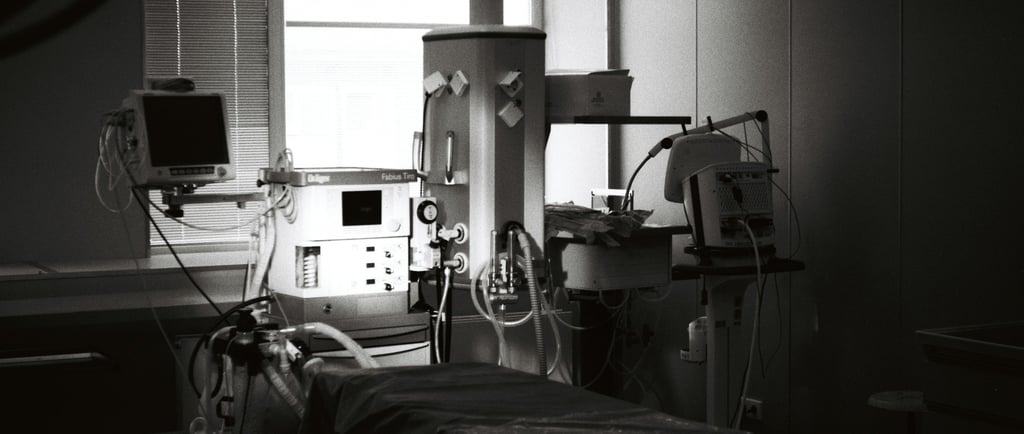
In 2019, a U.S. hospital system reported that unplanned medical equipment downtime cost an average of $8,662 per minute in lost revenue and delayed care, not counting patient safety incidents. The question is not whether your equipment will fail. It is whether you will be ready when it does.
Picture this: a radiologist is mid-scan, a patient prepped and waiting, when the imaging system throws an error code. The procedure is delayed by four hours while a technician is sourced. It is one incident. But multiply it across departments and across weeks, and you begin to see how equipment reliability is not just an IT concern. It is a patient care concern.
Healthcare facilities often treat equipment failures as logistics problems. In reality, the consequences fan out across three critical areas: clinical accuracy, operational continuity, and regulatory standing. A device that drifts out of calibration will not always announce itself with an error message. It may simply return slightly inaccurate readings, enough to affect a diagnosis, quietly, over time. These numbers are not anomalies. They reflect a systemic gap between how facilities manage equipment on paper and how devices actually perform under daily clinical demands.
This is where the distinction between reactive and proactive service matters most. Many facilities wait until something breaks before calling a technician. That model worked when the equipment was simpler. Today's diagnostic devices, infusion systems, and monitoring tools are sophisticated enough that by the time a visible fault appears, the underlying issue has often been developing for weeks.
A preventive maintenance program does not just extend equipment lifespan. It changes how your facility responds to risk. Issues are caught during scheduled inspections, not in the middle of a procedure.
ECBS approaches biomedical support through four core service areas, each designed to address a different phase of equipment health:
preventive maintenance programs that detect issues early
full equipment diagnostics and repair handled by certified biomedical technicians
calibration and performance testing to ensure clinical accuracy and regulatory compliance
installation and technical support for new or upgraded devices.
Healthcare equipment operates within a tight regulatory framework. The Joint Commission, FDA guidelines, and state health department standards all set expectations for how devices are maintained, tested, and documented. A lapsed calibration record or a skipped service interval can trigger citations during accreditation reviews, and in serious cases, jeopardize facility licensure. The challenge is that compliance is a moving target. Standards are updated, equipment ages, and staff turns over. Having a consistent biomedical partner means you are not piecing together service history from scattered work orders. You have documentation, you have records, and you have someone who understands the regulatory landscape as well as the devices themselves.
Scheduled maintenance has an upfront cost, and for facilities already managing tight budgets, it can feel like an added line item. But the math changes when you factor in the alternatives. Emergency repair rates are typically two to three times higher than scheduled service. Replacement equipment, when a device fails beyond repair, can cost tens of thousands of dollars. And the indirect costs of delayed procedures, staff overtime, and patient rescheduling rarely appear in the maintenance budget, but they are very real. Facilities that have adopted structured preventive maintenance programs consistently report fewer emergency callouts, longer equipment life cycles, and more predictable operating costs. That is not a soft benefit. That is a measurable return.
Everything in clinical care ultimately connects back to the patient. When diagnostic equipment is calibrated correctly, readings are reliable. When monitoring systems function without interruption, care teams can act on accurate data. When procedures are not delayed by avoidable equipment failures, patients receive care when they need it. ECBS supports hospitals, clinics, diagnostic centers, and healthcare facilities of all sizes, not as a vendor, but as a long-term operational partner. That distinction matters when equipment fails on a Sunday night, and you need someone who already knows your systems.
Do not wait for equipment failure to find out whether your service partner is ready. Schedule a preventive maintenance consultation with ECBS and protect your facility before the next incident. Contact ECBS today.
Services
Expert repair and inspection for medical equipment. Follow us on socials.
Ready to streamline your medical equipment services? Call us today! 732 928 4212 x5
© 2026. All rights reserved.