call 1 347-342-8184

The Deferred Work Order That Kills: What Hospitals Get Wrong About Corrective Maintenance
Tagged. Documented. Deferred. That's not risk management. It's a liability that compounds. Here's what hospitals get wrong about corrective maintenance, and what it actually costs.
5/12/20264 min read
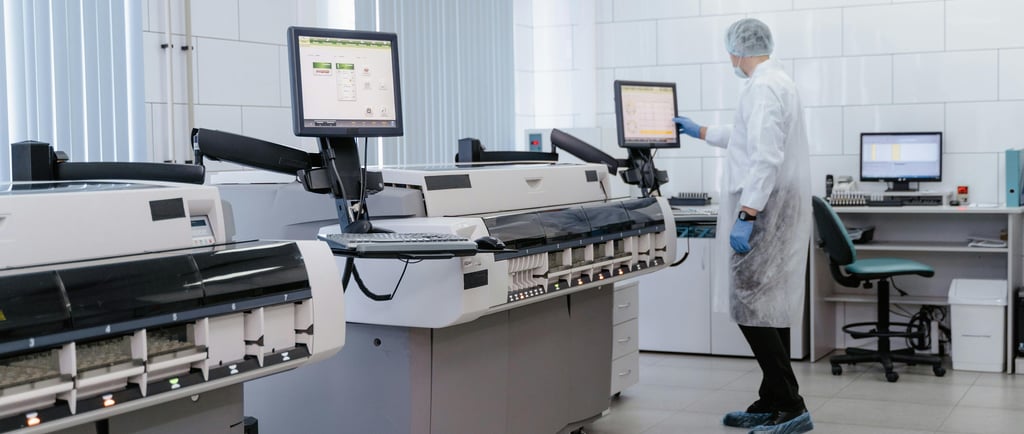
Your work order queue is 47 items deep. Three techs. Two of them are tied up on PM rounds that are due this week. The infusion pump with the intermittent alarm fault? It got bumped — again. Tagged, documented, sitting in the biomedical shop waiting for "a slow day."
There is no slow day.
This is the corrective maintenance trap — and it's quietly doing more damage to patient safety and biomed credibility than most departments want to admit.
The Difference Nobody Talks About
Preventive maintenance gets all the attention. CMMS dashboards, compliance percentages, Joint Commission readiness. Everyone knows what a PM looks like and how to measure it.
Corrective maintenance — the work you do after something breaks, faults, or fails — is treated like a footnote. There's no regulatory metric that tells you how fast you resolved that cardiac monitor alarm failure. No accreditation standard that tracks how long a ventilator sat in queue with a known fault before it went back to a unit.
That gap between "we documented the problem" and "we fixed the problem" is where patients get hurt.
Deferred Is Not the Same as Managed
There's a phrase that circulates in biomed shops: "It's tagged and out of service." The implication being: the hazard is controlled. The risk is contained.
Sometimes that's true. A clearly labeled, physically removed device sitting in a locked biomedical shop isn't treating patients. Fine.
But what about the device that's tagged, set aside, and then quietly returned to the floor because a nurse needed it and the replacement pool was empty? What about the pump that gets a "monitor for recurrence" note and goes back into rotation? What about the equipment that's deferred so many times the original fault note is six months old and three techs have touched it without resolution?
Deferred corrective maintenance isn't a queue. It's a liability that compounds over time.
Why This Happens — And It's Not Laziness
Biomed departments defer corrective work for real, structural reasons:
Staffing doesn't scale with fleet size. The ratio of technicians to managed devices has gotten worse at most facilities, not better. When PM compliance is the metric leadership watches, PM is what gets done. Corrective work gets what's left.
Parts availability is a genuine bottleneck. You can't fix what you can't get parts for. And with supply chain disruptions now a semi-permanent feature of the medical equipment world, some repairs sit not because of bandwidth — but because the board assembly is on 14-week backorder.
There's no external pressure to close corrective tickets. Survey teams look at PM completion rates. Nobody is auditing your mean time to repair. So the feedback loop that would force resolution simply doesn't exist.
Understanding why this happens matters because the solution isn't to blame the team — it's to redesign the system.
What a Corrective Maintenance Backlog Actually Costs
Let's be direct about what's in that deferred work order queue:
Clinical risk. Some percentage of that backlog is equipment with active faults — alarms that don't trigger, readings that drift, safety interlocks that have been bypassed. You may know which ones. Clinical staff almost certainly don't.
Regulatory exposure. CMS and accreditation bodies are increasingly interested in the effectiveness of equipment maintenance programs, not just compliance documentation. A long corrective backlog is evidence that your program isn't working — even if your PM rates look fine.
Accelerated equipment degradation. A minor fault that gets resolved in a week is a repair. The same fault deferred for three months is often a replacement. Deferred maintenance compounds. The equipment that needed a $200 part in February needs a $2,000 board swap by August.
Biomed credibility. When clinical staff submit a repair request and nothing happens for six weeks, they stop submitting repair requests. They work around the problem. They don't tell you. Now you have no visibility into faults you don't know about — and an equipment fleet that's actually less safe than your records suggest.
What Fixing This Actually Looks Like
This isn't a call to deprioritize PMs. It's a call to treat corrective maintenance with the same operational discipline.
Triage corrective work orders by risk, not by date. Not every fault is equal. An infusion pump with an intermittent audible alarm isn't the same as one with a flow accuracy issue. Build a severity classification into your intake process so the right work rises to the top of the queue — and leadership can see what's actually pending.
Set internal resolution targets — and track them. Even if no external standard requires it, set your own SLAs. High-severity faults resolved within 24 hours. Medium within 72. Low within two weeks. Put that data in front of your leadership. Make the backlog visible.
Stop using "out of service" as a long-term status. Out of service means unavailable and being actively worked. If a device has been OOS for 30 days with no resolution path, that's not a maintenance status — that's a fleet management problem that needs a procurement or rental conversation.
Make the backlog a leadership conversation, not just a biomed conversation. If your corrective queue is growing because you're understaffed or waiting on parts, that's a resource and supply chain issue — not a biomed failure. Get it in front of clinical engineering leadership with data, not just complaints.
The Question Worth Asking
Here's the uncomfortable version of all of this:
If a device fails on a patient tomorrow — and the root cause traces back to a fault that was documented, tagged, and deferred three months ago — what does your documentation trail look like?
"We knew about it" is not a defense. It's the opposite.
The goal of a corrective maintenance program isn't documentation of the problem. It's resolution of the problem. Those two things are not the same, and too many facilities are measuring the first one while hoping the second one is taking care of itself.
It isn't.
East Coast Biomedical Services provides comprehensive biomedical equipment maintenance, repair, and management services. If your facility's corrective maintenance backlog has grown beyond your team's capacity to manage, we can help — before that deferred work order becomes something worse.
Services
Expert repair and inspection for medical equipment. Follow us on socials.
Ready to streamline your medical equipment services? Call us today! 732 928 4212 x5
© 2026. All rights reserved.