call 1 347-342-8184

Repair or Replace? The Question Your Biomed Team Should Be Answering Before You Are
When critical equipment fails, the pressure to act fast leads to costly mistakes in both directions. Here is what actually drives smart repair-or-replace decisions and why having a framework in place before a breakdown occurs matters.
5/1/20263 min read
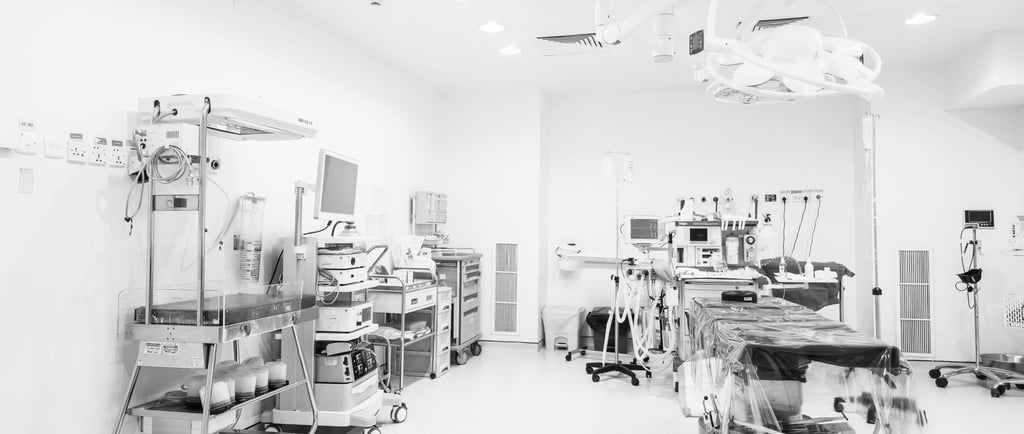
When a critical device fails, the instinct is often to replace it fast. But that impulse can cost facilities far more than the repair ever would - and the opposite mistake is just as common. Here's how to make the right call, every time.
Every facility eventually faces the same crossroads: a piece of equipment breaks down, costs are mounting, and someone in a meeting says “maybe it’s just time to replace it.” It’s a reasonable instinct. New equipment comes with warranties, updated features, and the psychological comfort of a fresh start.
But that instinct, unchecked, is expensive. And the reverse - repairing something past its useful life simply to defer capital spend - carries its own risks. The repair-or-replace decision is one of the most consequential calls in healthcare equipment management, and it’s one that too many facilities make reactively, without the data to support it.
“The worst repair-or-replace decisions happen under time pressure, with incomplete histories, made by people who weren’t there for the last three service visits.”
Why the instinct to replace isn’t always wrong - but often is
Newer equipment can mean better integration with current systems, updated safety profiles, and reduced calibration complexity. For devices approaching or past manufacturer end-of-support, replacement may genuinely be the lower-risk path. But the calculus changes significantly when:
• The failure is isolated, documented, and traceable to a single component
• The device has a strong performance history outside of this incident
• Replacement lead times would create more downtime than the repair itself
• The new model requires staff retraining or workflow changes
• Budget constraints mean a new unit comes at the cost of something else
In these cases, a well-executed repair - performed by a technician who knows the device - is almost always the better answer.
The metrics that actually matter
Total cost of ownership, not sticker price
A new device’s purchase price is only the beginning. Factor in installation, staff training, integration with existing systems, and the first year of PM costs before comparing it to a repair estimate. In most cases, the gap narrows considerably once you run the full number.
Failure pattern, not just failure frequency
One catastrophic failure is different from a device that has been in for service six times in 18 months for unrelated issues. The former may be a straightforward fix. The latter is a pattern - and patterns rarely improve on their own. Your biomed team’s service history is the single most useful input to this decision.
Parts availability and manufacturer support
Devices approaching end-of-life face an accelerating parts scarcity problem. What costs $200 in parts today may cost $800 - or be unavailable entirely - in 18 months. If your biomed team is already sourcing components from secondary suppliers, that’s a signal worth taking seriously.
Clinical downtime cost
How long does the repair take, and what does that downtime cost operationally? For high-utilization devices, even a three-day repair window can have measurable revenue impact. If a replacement can be deployed faster than a repair, that calculus shifts - though in practice, new equipment delivery and setup rarely outpaces a competent biomed repair on a common device.
The case for a structured decision framework
The facilities that consistently make good repair-or-replace decisions aren’t smarter - they’re more prepared. They have up-to-date service histories, cost-per-unit tracking, and a biomed partner who can provide a frank assessment before the pressure of a breakdown forces a rushed choice.
If your team is making these decisions case-by-case without a consistent framework, you’re not necessarily making bad calls - but you’re making them harder than they need to be, and leaving money on the table in both directions.
At East Coast Biomed, we help facilities build that framework before the failure happens. Because the best time to decide what you’ll do when a device goes down is before it does.
Services
Expert repair and inspection for medical equipment. Follow us on socials.
Ready to streamline your medical equipment services? Call us today! 732 928 4212 x5
© 2026. All rights reserved.